NBEO Part 1 Biochemistry, Immunology, and Microbiology Review
A focused guide to NBEO Part 1 biochemistry, immunology, and microbiology: the visual cycle, lens metabolism, hypersensitivity reactions, and the ocular pathogens that appear most often.
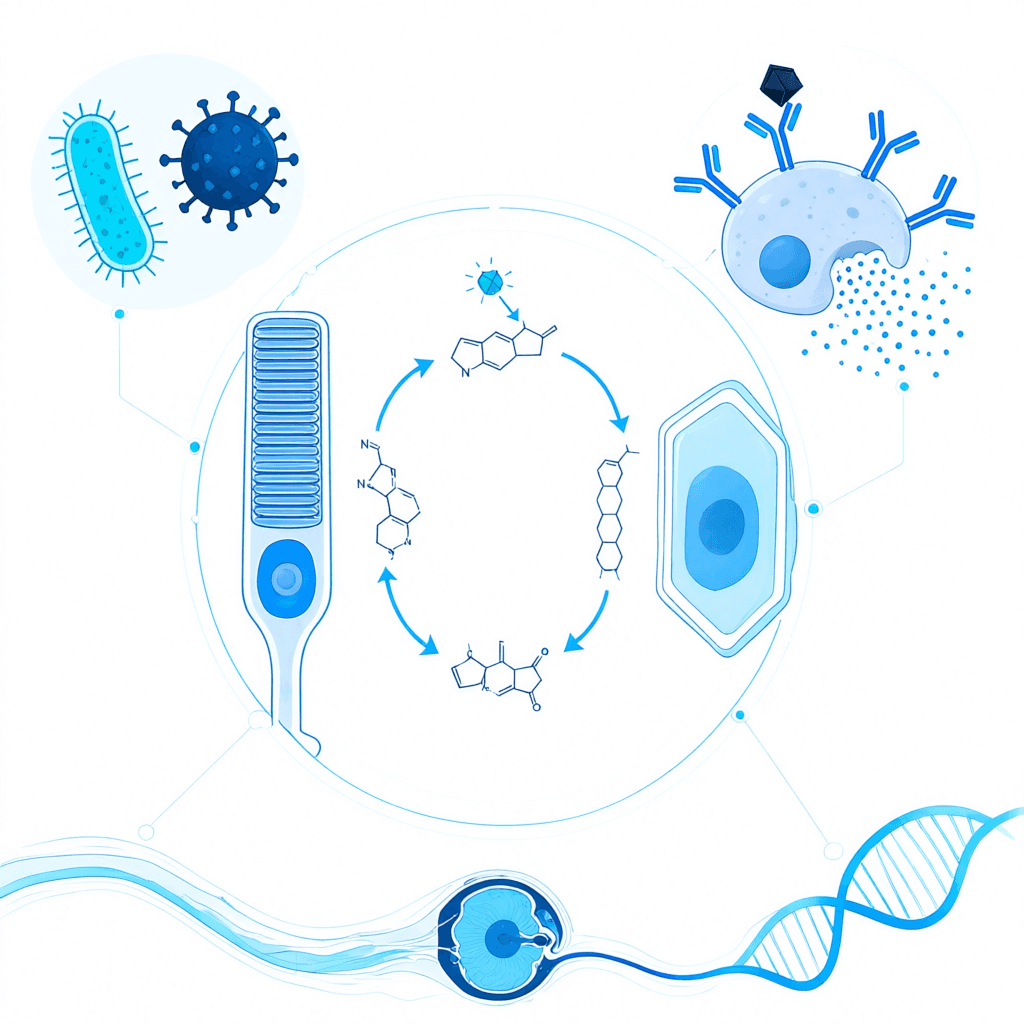
NBEO Part 1 Biochemistry, Immunology, and Microbiology Review
Biochemistry and physiology are 10-14% of scored items, while immunology/microbiology/pathology combined is 22-30%. These areas are tested through clinical conditions, especially ocular inflammation and infection. High-yield topics include the visual cycle, lens metabolism, hypersensitivity reactions, ocular pathogens, and the mechanisms of ocular inflammation. Integration with pharmacology and systemic disease is essential — and it's the integration that separates students who pass from students who just memorize.
The science tested on NBEO Part 1 is not abstract. It is the underlying biology of the conditions you will see in practice. Biochemistry and immunology are most valuable when you understand how they explain disease, not when you memorize isolated pathways. This guide focuses on the mechanisms that connect basic science to clinical optometry.
Biochemistry: The Visual Cycle
The visual cycle is a classic high-yield topic. You should understand:
- The conversion of 11-cis-retinal to all-trans-retinal after photon absorption.
- The role of photoreceptors, retinal pigment epithelium, and Müller cells in recycling retinal.
- The enzymes involved in the cycle and where they act.
- Vitamin A deficiency and its effects on night vision.
- The molecular basis of inherited retinal dystrophies that affect the visual cycle.
Items often test what happens when a step in the cycle is disrupted, or how a vitamin A deficiency manifests clinically. Draw the cycle and practice explaining each step in words.
Lens Metabolism and Cataract
Lens metabolism is another high-yield biochemistry topic. Key points include:
- The lens relies on glycolysis and the sorbitol pathway for energy.
- The role of Na+/K+ ATPase in maintaining lens transparency.
- How oxidative stress and UV damage contribute to cataract formation.
- Diabetes and the sorbitol pathway in sugar cataract development.
- Lens protein changes with aging and cataractogenesis.
Connect lens metabolism to clinical cataract types, risk factors, and the pharmacology of cataract prevention (where applicable).
Aqueous Humor Dynamics and Corneal Metabolism
Other high-yield physiology and biochemistry topics include:
- Aqueous humor production by the ciliary body and drainage through the trabecular meshwork and uveoscleral pathway.
- Corneal metabolism: epithelial glycolysis, stroma maintenance, and endothelial pump function.
- Tear film composition and the layers responsible for stability and lubrication.
- Wound healing in the cornea and conjunctiva.
These topics connect directly to glaucoma, dry eye, and corneal disease, which are heavily tested on the exam.
Immunology: Hypersensitivity Reactions
Hypersensitivity reactions are a cornerstone of immunology on NBEO Part 1. You should be able to identify and give ocular examples for all four types.
Type I is IgE-mediated immediate hypersensitivity, with ocular examples like allergic conjunctivitis and atopic keratoconjunctivitis. Type II is cytotoxic antibody-mediated, seen in myasthenia gravis and Graves ophthalmopathy. Type III is immune complex-mediated, associated with scleritis and vasculitis. Type IV is T-cell-mediated delayed hypersensitivity, which produces contact dermatitis and phlyctenular keratoconjunctivitis.
For each type, know the immune mechanism, the cells involved, and the clinical ocular conditions that result.
Ocular Microbiology
Ocular microbiology covers the organisms that cause common eye infections. High-yield pathogens include:
- Bacteria: Staphylococcus aureus, Streptococcus pneumoniae, Pseudomonas aeruginosa, Chlamydia trachomatis, Neisseria gonorrhoeae.
- Viruses: Herpes simplex virus, Varicella zoster virus, Adenovirus, Cytomegalovirus.
- Fungi: Fusarium, Aspergillus, Candida.
- Parasites: Acanthamoeba, Toxoplasma gondii.
For each organism, know the typical clinical presentation, the preferred diagnostic approach, and the first-line treatment. Microbiology is often tested in combination with pharmacology and disease management.
Inflammation and Uveitis
Uveitis is a major bridge between immunology and clinical disease. High-yield topics include:
- Anatomic classification (anterior, intermediate, posterior, panuveitis).
- Common associations: HLA-B27, sarcoidosis, syphilis, TB, Behçet, juvenile idiopathic arthritis.
- Diagnostic workup for systemic associations.
- Treatment ladder: cycloplegics, steroids, immunomodulators, and biologics.
- Complications: cataract, glaucoma, macular edema, epiretinal membrane.
Molecular Genetics and Inherited Ocular Disease
Basic science on NBEO Part 1 increasingly connects molecular mechanisms to inherited conditions. While you do not need to memorize every genetic mutation, you should recognize the biochemical pathways that are disrupted in classic ocular diseases.
Retinitis pigmentosa describes a group of rod-cone dystrophies that often involve defects in phototransduction or the visual cycle. Patients present with nyctalopia, peripheral visual field constriction, and bone-spicule pigmentation. The biochemical theme is failure of photoreceptor maintenance, whether through abnormal rhodopsin, defective retinal recycling, or disrupted outer-segment structure.
Leber congenital amaurosis and Stargardt disease are additional examples where a molecular defect produces a recognizable clinical picture. Stargardt disease is linked to mutations in the ABCA4 gene, which affects the visual cycle and leads to accumulation of lipofuscin in the retinal pigment epithelium. The macular appearance and fleck-like changes are clues on the exam.
Albinism is another high-yield condition. The lack of melanin in the retinal pigment epithelium and iris affects foveal development and creates nystagmus, strabismus, and reduced acuity. The molecular theme is disrupted melanin biosynthesis, which is tested through the associated clinical findings rather than detailed biochemistry.
For each inherited condition, focus on the pathway that is disrupted, the pattern of inheritance, and the ocular findings that would appear in a vignette. This approach keeps the molecular material clinically anchored.
Complement, Inflammation, and Ocular Surface Defense
The ocular surface has a sophisticated immune defense system that relies on tears, complement, mucosal immunity, and the epithelial barrier. Understanding this system helps explain why certain infections and inflammatory conditions behave the way they do.
The tear film contains immunoglobulins, lysozyme, lactoferrin, and complement proteins that provide the first line of defense against pathogens. Disruption of the tear film, whether from meibomian gland disease or aqueous deficiency, increases susceptibility to bacterial and viral surface infections. Contact lens wear can introduce pathogens and disrupt the epithelial barrier, which is why Pseudomonas and Acanthamoeba are more common in lens wearers.
Complement activation plays a role in both protective immunity and pathologic inflammation. In age-related macular degeneration, complement dysregulation contributes to chronic inflammation and neovascularization. The exam may connect this mechanism to clinical findings such as drusen, geographic atrophy, or choroidal neovascularization.
The conjunctiva also contains lymphoid tissue that participates in mucosal immune responses. Allergic conjunctivitis and giant papillary conjunctivitis involve IgE-mediated and mechanical immune activation, respectively. Understanding the immunologic basis of these conditions helps you select the right treatment, from antihistamines to mast-cell stabilizers to corticosteroids.
By studying ocular surface defense as an integrated system, you can answer items that connect infection, inflammation, and pharmacology in a single clinical scenario.
Study Strategy
Biochemistry and immunology reward understanding over rote memorization. For each pathway or mechanism, ask how it explains a clinical finding. Use diagrams for pathways and flashcards for organisms and drug classes. Pair microbiology with pharmacology so you know which drug treats which bug.
Because this material overlaps heavily with systemic health and pharmacology, the most efficient approach is to study it in clinical clusters. For example, study dry eye alongside tear film physiology and immunology, and study uveitis alongside its infectious and autoimmune associations.
If you want video crash courses, thousands of questions, and AI tools to drill your weakest basic science topics, check out plans and pricing when you're ready.
How to Study Microbiology Without Overloading
The list of ocular pathogens is long, but the exam rewards pattern recognition over memorization of every organism. Here is how to study efficiently.
Focus on the big five bacterial causes. Staphylococcus aureus, Streptococcus pneumoniae, Pseudomonas aeruginosa, Chlamydia trachomatis, and Neisseria gonorrhoeae cover most bacterial ocular infections. Know the typical presentation, risk factors, and first-line treatment for each.
Group viruses by clinical syndrome. Herpes simplex and varicella zoster both cause dendritic or pseudodendritic lesions. Adenovirus causes epidemic keratoconjunctivitis. Cytomegalovirus is relevant in immunocompromised patients. Grouping by syndrome simplifies recall.
Know the classic fungal and parasitic clues. Acanthamoeba is associated with contact lens wear and water exposure. Toxoplasma causes focal necrotizing retinochoroiditis. Fusarium and Aspergillus are associated with trauma and organic matter. These clues are often the key to the correct answer.
Connect the bug to the drug class. Instead of memorizing drug names for every organism, know the drug class that covers the bug. The exam often tests whether you know which class to start with, not which specific drug within the class.
Use pattern recognition, not rote lists. For each organism, create a mental snapshot: typical patient, typical finding, and typical treatment. The exam usually presents the classic case, so pattern recognition is more valuable than obscure facts.
Quick Review Checklist for Biochemistry, Immunology, and Microbiology
Use this checklist to make sure your basic science study is clinically focused and efficient.
- You can explain the visual cycle and the role of vitamin A in night vision.
- You understand lens metabolism and how diabetes affects the lens.
- You can describe aqueous humor dynamics and corneal metabolism.
- You know the four hypersensitivity reactions and their ocular examples.
- You can recognize the major bacterial, viral, fungal, and parasitic ocular pathogens.
- You understand uveitis categories and their systemic associations.
- You connect microbiology to the appropriate drug classes for treatment.
- You study these topics alongside pharmacology and systemic disease for integration.
Basic science on NBEO Part 1 is tested through the conditions it explains.
What This Means for You
Biochemistry, immunology, and microbiology are not abstract subjects on NBEO Part 1. They explain why patients present the way they do. The visual cycle explains night blindness. Lens metabolism explains diabetic cataract. Hypersensitivity reactions explain allergic conjunctivitis and uveitis. Pathogens explain infectious keratitis and retinochoroiditis. Study these mechanisms by asking how they produce clinical findings, and you will retain more than you would by memorizing isolated pathways. Integration is the key to basic science mastery on this exam.
Key Terms to Remember
- Visual cycle: The biochemical process by which retinal isomerizes after light exposure and is recycled by the retinal pigment epithelium.
- Lens metabolism: The energy pathways in the lens, including glycolysis and the sorbitol pathway, relevant to cataract formation.
- Hypersensitivity reaction: An immune-mediated reaction categorized into four types, each with distinct mechanisms and ocular examples.
- Ocular pathogen: An infectious organism that affects the eye, such as bacteria, viruses, fungi, or parasites.
- Uveitis: Inflammation of the uveal tract, often associated with systemic infections or autoimmune diseases.
- Wound healing: The biological process of tissue repair, important in corneal injury and surgery.
NBEO Part 1 biochemistry, immunology, and microbiology are tested through clinical conditions; focus on the visual cycle, lens metabolism, hypersensitivity reactions, ocular pathogens, and uveitis. The students who do best on this material are the ones who stop memorizing isolated facts and start connecting them to the patients they'll see in practice. If you want a platform that helps you build those connections, check out plans and pricing when you're ready.
Ready to crack the NBEO Part 1?
Crack the Optometry Boards gives you 5 full-length NBEO Part 1 mock exams, 5,000+ exam-style questions, 30+ hours of video crash courses, 20,000+ flashcards, and a complete study engine: Adaptive Quiz Generator, Adaptive Flashcard Generator, AI Tutor, Homework Helper, YouTube Summarizer, and Study Schedule Creator. Everything is aligned to the official NBEO Part 1 blueprint and comes with unlimited tokens, unlimited credits, no throttling, unlimited access, and unlimited usage. No subscriptions, no usage caps.
No credit card required for the free trial. One-time payment for full access.
Related articles
NBEO Part 1 High-Yield Topics by Content Blueprint
Focus your NBEO Part 1 prep on the topics that appear most: optics, systemic health, neuro-ophthalmic anatomy, pharmacology, and the item-style traps that cost points.
Section GuidesNBEO Part 1 Optics Guide: Vergence, Magnification, and Binocular Vision
Master NBEO Part 1 optics with a focus on vergence, spectacle magnification, low vision, binocular vision, and contact lens calculations. Learn why conceptual understanding now beats formula memorization.
Section GuidesNBEO Part 1 Anatomy and Physiology: Ocular and Neuro Topics
A focused guide to NBEO Part 1 anatomy and physiology: ocular anatomy, neuro-ophthalmic pathways, cranial nerve palsies, pupil defects, and visual pathway lesions.
Turn strategy into a passing NBEO Part 1 score
5 full-length NBEO Part 1 mock exams, 5,000+ questions, 30+ hours of video, and unlimited AI tools. Start today.
Unlock Everything